Be yourself; Everyone else is already taken.
— Oscar Wilde.
This is the first post on my new blog. I’m just getting this new blog going, so stay tuned for more. Subscribe below to get notified when I post new updates.
Be yourself; Everyone else is already taken.
— Oscar Wilde.
This is the first post on my new blog. I’m just getting this new blog going, so stay tuned for more. Subscribe below to get notified when I post new updates.
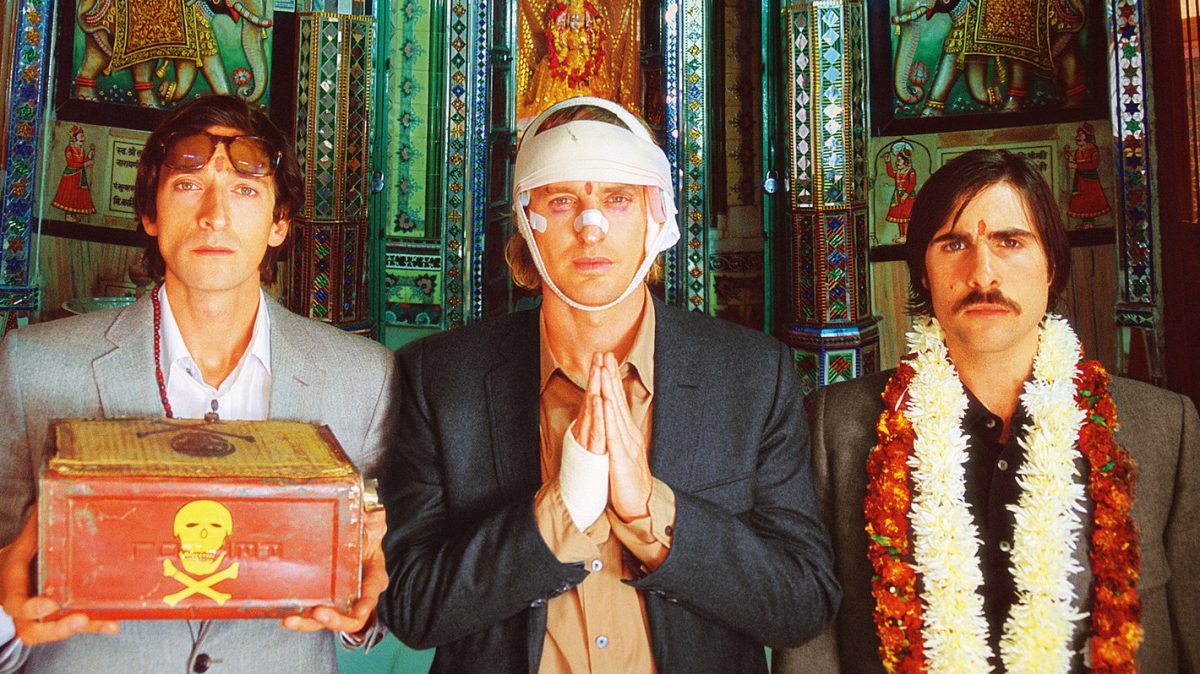
The Darjeeling Limited, part-comedy, part-travelogue, follows 3 brothers, Francis, Peter, and Jack, as they embark on a spiritual journey across India. Filmed entirely in Jodhpur, The Darjeeling Limited sets a beautiful precedence for tourism-esque films, as Director Wes Anderson’s painstaking cinematography captures India as a sacred destination.
In The Darjeeling Limited, The 3 brothers reunite in India for what’s meant as a journey of self-discovery, on a train called The Darjeeling Limited. The story develops as the 3 brothers attempt to fix a void left behind by their Father, who was the binding entity in their family’s harmony and cohesion. The movie later reveals that Francis, the one who organised this trip, was secretly searching for their mother, who has absconded to India after the Fathers death to become a nun. We watch as the 3 brothers go through many trials and tribulations while attempting to connect with the spiritual land of India.
Anderson masterfully incorporates outstanding visuals of India’s cultural sites and natural beauty into the film, while promoting India as an esoteric destination for travellers looking for soul-searching and mystique. Likely inspired by the Darjeeling Himalayan Railway, a designated World Heritage site by UNESCO in 1999, we watch as the 3 brothers travel India and the Himalayas via train. In the first act of the film, the 3 brothers visited a Sikh temple in Jodhpur, Rajasthan, where they took part in rituals with locals. While the 3 brothers struggled in hilarity as they got confused by the rituals and awkwardly tried to fit in with the locals, the film never forgot to include the admonishing decor of the temple and captivate us with symbolic artifacts and ceremonial objects; a glimpse into India’s Hindu religion and rich culture. The film continued with adventures of the 3 brothers, visiting a local marketplace, a local village, the Udaipur Airport (an old terminal building), before the story climaxes at the Osian Dunes at the Himalayas.
The Darjeeling Limited has received worldwide acclaim for its setting in India. Roger Ebert of the Chicago Sun-Times gave the film 3.5/4, calling the film’s Indian context as one of its main highlights. Ebert has lauded Anderson’s usage of India ” not in a touristy way, but as a backdrop.” Nevertheless, this film has stirred the tourism industry worldwide, with media outlets such as Vogue, and The National Geographic, compiling a list of luxury liners for ardent fans of the movie looking to recreate the 3 brothers’ journey.
The Darjeeling Limited is a stellar film that has portrayed India in its deserved glory and has indubitably riveted the hearts of excited gallivants and globetrotters, itching to book their next trip to the charismatic land of Incredible India
“Oh Granny, what big eyes you’ve got!”
“I’ll huff, and i’ll puff, and i’ll puff, and i’ll blow your house in!”
“Mirror, mirror on the wall, whose the fairest of them all?”
When was the last time you read or heard about the story of Red Riding Hood, Three little pigs, or Snow White and the seven dwarves? Mine was back in kindergarten, back when i played with Legos, had trouble spelling my name, and i was learning to read… or write? Hell, i cant even remember. Yet the mention of these quotes intuitively brought me back to these fairy tales resoundingly, which for some reason i am still able to remember the book from head to toe. Why is that so? I sought to find out.
On 31 January 2020, Friday, and my fellow SIT Hospitality Business students and I were hosted by Mr Azhar Abdul-Salam, Course Manager and Senior Lecturer for the Diploma in Mass Media Management, for Nanyang Polytechnic. With experience ranging from Mediacorp to ESPN, my follow classmates and I listened intently as he shared with us story-telling structures and the process behind video productions.
Mr Azhar touched on storytelling techniques and humoured us with his bubbly anecdotes. He further demonstrated these with video examples. With a large emphasis on storytelling, i learned more on what makes a story good.
With the short video titled Petronas’ ‘Tan Hong Ming’, not even 2 minutes long, he exemplified how to create a good story. A simple short interview with 2 young children, to tackle the problem of racial discrimination in todays society, has really put into perspective what storytelling means. It did not matter that the video production was imperfect, nor did it matter that there was neither a script, nor expensive editing. What mattered was that it was a genuine, empathetic story.
Next, he showed us the story of Google’s ad titled ‘Reunion’, a powerful video touching on the forsaken friendship of 2 childhood friends fractured due to the Pakistan-Indian Border. A heartfelt advertisement, Google truly exemplifies how to incorporate features of their product while telling a captivating story, which has definitely left a mark on me. “A good story helps the audience connect to the characters in the video”, Mr Azhar demonstrated perfectly on why stories matter.
A good story is one that fascinates and draws in the audience. A good story brings out emotions of the audience. A good story is not inhibited by duration or time – it is timeless.
And perhaps, that is why I’ll always be able to remember the next line: “”No, no, by the hair on my chinny chin chin.”
And that is why stories, matter.
Times should be adapted to.
It is a laudable achievement for TTG Asia, an organisation established in 1974, commemorating its 46th year as a veteran in the tourism and media industry. However, its journey has not come without its trials and tribulations. With the rise of new media, the media industry has been hit hard, with traditional print media, the lifeblood of TTG, phasing out and being replaced by digital media. What do you do then?
On 24th January 2020, we were graced by Mr Ooi Peng Ee, Head of TTG Global Commerce and Development and Publisher, where he gave a talk about the zeitgeist of the tourism and media industry. The talk comprised of insight into the company’s procedures, the current market environment, and TTG’s corporate strategy going forward.
TTG started with print publications in 1974, and was the number one platform, lauded as the “goldmine for the industry,” as the lack of the internet then meant that such deals and info were only available in this exclusive magazine. The strength of TTG was their credibility and their ability at producing quality content that is relevant, timely, and news-worthy, making it highly sought after in the industry.
Mr Ooi also mentioned that the current market environment is constantly changing, with disruptions like new media and changing customer preferences. Mr Ooi talked about the need to adapt, a recurring theme in today’s talk, and explained TTG’s diversification plans. In 1985, they branched into database marketing, providing rich data assets for clients. With the help of their database, they started a conference in 1998 – Corporate Travel World – with its niche in attracting C-level key stakeholders, making it a highly esteemed trade fair today. In 2009, TTG digitalised its media, and slowly integrated its print publication online, in the same theme of keeping up with the times. I was inspired by TTG and their continuous advocacy for adaptation.
Looking into the future, Mr Ooi has revealed TTG’s future plans to us, such as their Experential Travel App, the Experience Pass initiative, and also new partnerships with accomplished tech companies such as LDR Technology and GlobalTix. TTG’s ability to adapt and anticipate future threats has defined them as a powerhouse in the tourism and media industry.
Success is not achieved from a surefire formula, instead it is the capability to adapt to the perilous threats in this ever-changing and hostile business environment.
A famous latin proverb comes to mind: Tempora aptari decet (hence the title). We should not plan and then try to make circumstances fit those plans. Instead we should make plans fit the circumstances, and TTG is a loud testament to this.
test
This is an example post, originally published as part of Blogging University. Enroll in one of our ten programs, and start your blog right.
You’re going to publish a post today. Don’t worry about how your blog looks. Don’t worry if you haven’t given it a name yet, or you’re feeling overwhelmed. Just click the “New Post” button, and tell us why you’re here.
Why do this?
The post can be short or long, a personal intro to your life or a bloggy mission statement, a manifesto for the future or a simple outline of your the types of things you hope to publish.
To help you get started, here are a few questions:
You’re not locked into any of this; one of the wonderful things about blogs is how they constantly evolve as we learn, grow, and interact with one another — but it’s good to know where and why you started, and articulating your goals may just give you a few other post ideas.
Can’t think how to get started? Just write the first thing that pops into your head. Anne Lamott, author of a book on writing we love, says that you need to give yourself permission to write a “crappy first draft”. Anne makes a great point — just start writing, and worry about editing it later.
When you’re ready to publish, give your post three to five tags that describe your blog’s focus — writing, photography, fiction, parenting, food, cars, movies, sports, whatever. These tags will help others who care about your topics find you in the Reader. Make sure one of the tags is “zerotohero,” so other new bloggers can find you, too.
Have a WordPress.com account? Log in now.

